HVAC Sizing & Manual J in Burbank
Fast take: Burbank Carrier HVAC sizes Carrier equipment with an ACCA Manual J load calculation for Burbank, CA homes - especially the small pre-war bungalows of Magnolia Park (91505) that are chronically oversized; call (213) 277-7557 or book online. We size to the measured load first, then pick the Carrier tier - never the other way around.
By the numbers
- ACCA's Manual J is the accepted way to pin down a home's real heating and cooling load.
- A ton of cooling is 12,000 BTU/h; sizing turns on BTUs, never square-footage shortcuts.
- Compact Burbank bungalows frequently want 2-3 tons - below the 3.5-4 tons that often get installed.
- Go too big and you invite short cycling, weak dehumidification, and premature compressor failure.
- For Climate Zone 9, Title-24 pegs code calcs to CEC design temperatures rather than city limits.
- Right-sizing pairs with duct sizing (Manual D) and equipment selection (Manual S).
- Service area 91501-91523; hours Mon-Sat 7am-7pm; emergency calls anytime.
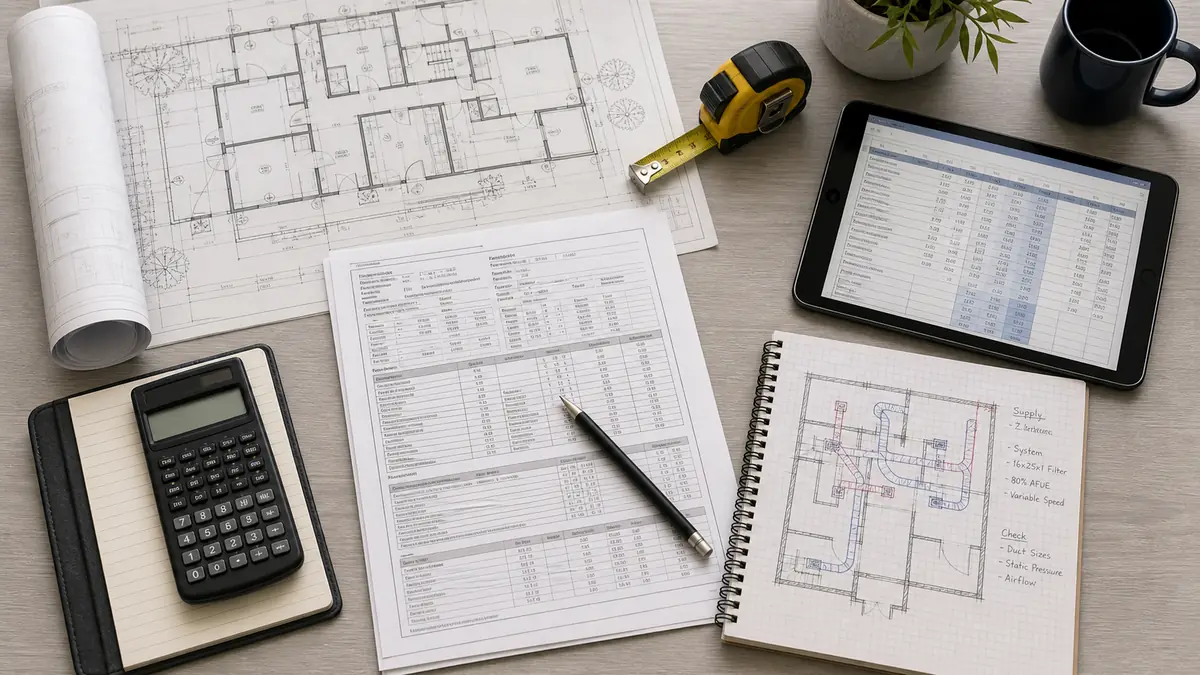
Why does sizing matter so much in Burbank?
Sizing is the single decision that determines whether your new Carrier system is comfortable and durable or noisy and short-lived. In Burbank, the stakes are higher because the housing stock invites mistakes. Magnolia Park, Chandler Park, and the streets off Magnolia Boulevard are full of small 1920s-1940s Spanish and Tudor cottages and California bungalows with modest cooling loads - yet they routinely carry oversized condensers because contractors matched the dead unit's tonnage. The valley-floor heat then masks the symptom for a while, since an oversized unit at least keeps up on a 95 F day, but the short cycling, poor humidity control, and accelerated wear are doing damage the whole time.
A real Manual J load calculation clears away the guesswork. It quantifies what the house genuinely calls for - weighing its insulation, windows, orientation, infiltration, and the local design temperatures the energy code cites for Climate Zone 9 - and then locks the tonnage to that result.
What does a load calculation account for?
A real Manual J is more than square footage. It weighs each heat-gain and heat-loss path so the result reflects your specific house, not a generic box of the same size.
| Input | Why it matters here |
|---|---|
| Conditioned floor area | Base load, but only the starting point |
| Insulation (walls, attic) | Pre-war bungalows often under-insulated |
| Window area and orientation | West-facing glass drives afternoon peak gain |
| Air infiltration | Old plaster cottages leak more than new tracts |
| Ceiling height / volume | Tall living rooms add load |
| Design temperatures | Climate Zone 9 valley-floor heat, not coastal |
| Internal gains | Occupants, appliances, lighting |
What is the real cost of getting it wrong?
Miss in either direction and it stings, but in Burbank the usual slip is going too big. A system that is oversized hits the thermostat target within minutes, so it never stays on long enough to draw humidity from the air or even out the swing from room to room. Near the unit you sit clammy and chilled; down the hallway it stays warm. The compressor absorbs the worst of it, because each restart is its peak-current instant, and firing every few minutes piles that strain up toward an early $1,200-$3,500 failure. Undersizing, the less frequent error, sets the system grinding away nonstop on a 95 F afternoon without ever quite catching up. The table lays out the trade-offs.
| Sizing | What you get | Consequence |
|---|---|---|
| Oversized | Fast cooling, then off | Short cycling, clammy air, early failure |
| Right-sized | Long, steady cycles | Even comfort, good dehumidification, longevity |
| Undersized | Runs constantly | Never reaches set point on hot days |
A worked example: sizing a 1,200 sq ft Magnolia Park bungalow
Walk through how the two methods diverge on a real Burbank home. Take a 1,200-square-foot 1930s Spanish cottage in Magnolia Park: plaster walls, partial attic insulation added over the years, double-hung windows with a west-facing living room, and the valley-floor design temperature for Climate Zone 9.
The rule-of-thumb path. The old contractor shortcut is roughly 400 to 600 square feet per ton. At 500 sq ft per ton, 1,200 sq ft "needs" 2.4 tons, which gets rounded up to a 3-ton unit - or, if the installer simply matches the dead 4-ton condenser that was there, a 4-ton unit. Either way the home is now carrying 25 to 65 percent more capacity than it can use.
The Manual J path. A real load calc adds up the actual heat gains - conduction through walls and the under-insulated attic, solar gain through that west glass, infiltration through an old plaster envelope, plus internal gains from people and appliances - and for a tightened-up cottage like this it typically lands near 24,000 to 30,000 BTU/h, or 2 to 2.5 tons. That is a full ton or more below the rule-of-thumb pick. The gap is not a rounding error; it is the difference between a system that runs steady, comfortable cycles and one that short-cycles itself to an early grave.
| Method | Result | What you get |
|---|---|---|
| Match the old unit | 4 tons | Badly oversized, chronic short cycling |
| 500 sq ft per ton | 3 tons | Still oversized for a tight cottage |
| Manual J load calc | 2 to 2.5 tons | Long, steady, dehumidifying cycles |
What is the oversizing failure chain?
Oversizing does not announce itself - it shows up as a cascade of smaller complaints that trace back to one root. The chain runs like this. An outsized condenser drives the room to setpoint in two or three minutes, far faster than the few minutes a coil needs to start wringing moisture from the air, so the unit cuts off before it dehumidifies. The rooms near the unit go cold and clammy while the far bedrooms stay warm, because the cycle was too short to move conditioned air through the whole house. The thermostat soon calls again, and the compressor restarts - and because startup is the compressor's highest-current, highest-heat instant, doing it every few minutes piles thermal and electrical stress onto the windings and the start components. The run capacitor and contactor wear faster, the compressor overheats, and a unit that should have lasted 15 years marches toward a $1,200-$3,500 compressor failure years early. Meanwhile efficiency suffers, because the system never settles into the steady-state operation its SEER2 rating assumes. Every link in that chain starts with a tonnage that was never matched to the load - which is exactly what a Manual J prevents.
How does sizing connect to ducts and equipment choice?
Manual J opens a chain of three steps. With the load settled, Manual D sizes the ducts to move the airflow that load demands, and Manual S pins down the exact Carrier equipment that meets that load at your design conditions. Leave out the duct step and even a flawlessly sized condenser falls short - precisely what happens when someone drops a high-efficiency variable-speed system onto leaky, undersized 1950s ducts. That is the reason we meter static pressure and suggest duct sealing or resizing with any right-sized replacement, and the reason an undersized or crushed return resurfaces down the road as a frozen coil or short cycling.
What tonnage do Burbank's common home types actually land at?
Every house gets its own load calc, but it helps to see the ballpark by Burbank's housing types so you can sanity-check a quote. These are starting reference points, not substitutes for a Manual J - insulation upgrades, window replacements, shade, and orientation can move any of them by half a ton or more.
| Home type | Rough size | Typical load |
|---|---|---|
| 1920s-1940s Magnolia Park cottage | 1,000-1,400 sq ft | ~2 to 3 tons |
| Post-war minimal-traditional / ranch | 1,200-1,800 sq ft | ~2.5 to 3.5 tons |
| Larger Burbank Hills two-story | 2,000-2,800 sq ft | ~3.5 to 5 tons |
| Media District condo / loft | 700-1,400 sq ft | ~1.5 to 2.5 tons |
Notice how often the small-cottage figure sits below the 3.5- or 4-ton condenser bolted to so many of these homes today. That recurring gap is the single biggest sizing problem we find in Burbank, and it is why a load calc routinely points toward a smaller, not larger, replacement than the unit it is swapping out. A west-facing living room or a poorly insulated attic can nudge the number up, while a recent insulation-and-window upgrade pulls it down - which is precisely the kind of detail a square-footage shortcut ignores and a Manual J captures.
Which Carrier tier fits once you know the load?
Size first, then choose. For a small, tight cottage at 2 to 2.5 tons, a single-stage Comfort or Performance unit often delivers fine comfort at a lower price. For a larger or two-story Burbank Hills home where even temperatures and quiet matter, a two-stage 26TPA8 or a variable-speed Greenspeed 24VNA6 earns its premium by running long, low-output cycles. The mistake is letting the tier drive the tonnage - pick the capacity from the load calc, then match the tier to how the home behaves. Compare options on our Performance and Infinity pages.
Common questions
What is a Manual J load calculation?
Manual J, published by ACCA, is the trade's accepted way to work out precisely how much heating and cooling a given house demands, expressed in BTUs per hour. It factors in floor area, insulation, the size and facing of windows, air infiltration, ceiling height, and the local design temperatures, then matches equipment to that figure rather than to a guess. That is how tonnage should be chosen.
Why is an oversized AC bad if it cools faster?
Speed is not the point - steady temperatures and dry air are. A unit that is too large drives the thermostat to setpoint in a couple of minutes and quits before it can wring moisture from the air, then fires right back up. The result is cold, clammy rooms, short cycling, fatter bills, and a compressor ground down by start after start. Properly sized gear runs longer, easier cycles.
How many tons does a Burbank bungalow need?
The house decides, but a small single-story Magnolia Park cottage of 1,000 to 1,400 square feet with reasonable insulation tends to come in near 2 to 3 tons - often under the 3.5- or 4-ton unit bolted to it today. There is no way to nail yours short of a load calc; a square-footage shortcut will not do it.
Does a variable-speed Carrier system fix oversizing?
It cushions the problem without giving you permission to oversize. Since a Greenspeed 24VNA6 can throttle down to roughly 25 percent, it absorbs a slightly generous size more gracefully than a single-stage unit would. Even so, getting the size right still counts - every variable-speed system bottoms out at some minimum output, and one that is wildly oversized will cycle anyway. Settle the size first, then choose the tier.
Last updated 2026-06-13.
Related: repair or replace, SEER2 and rebates, and duct repair and sealing.